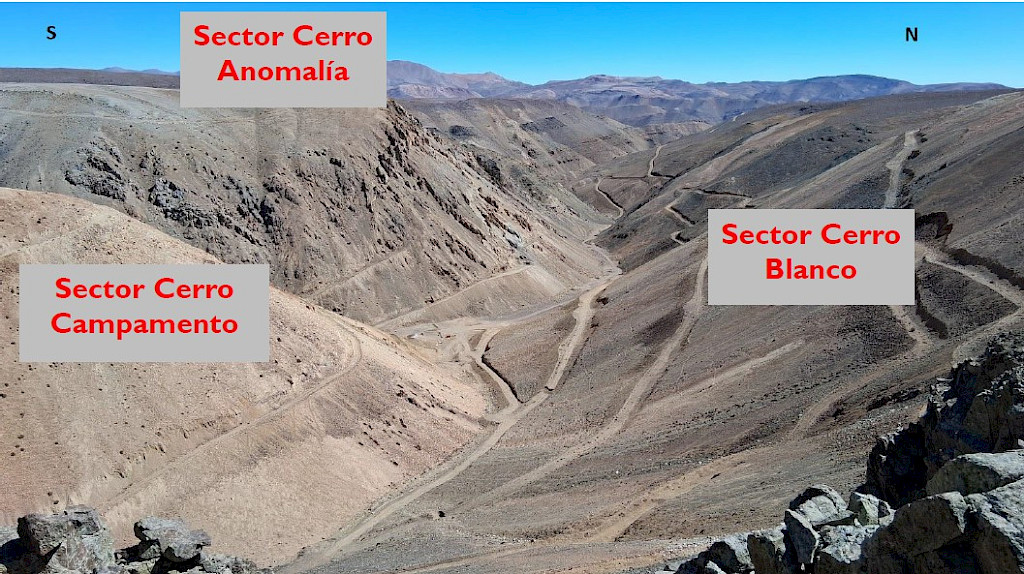
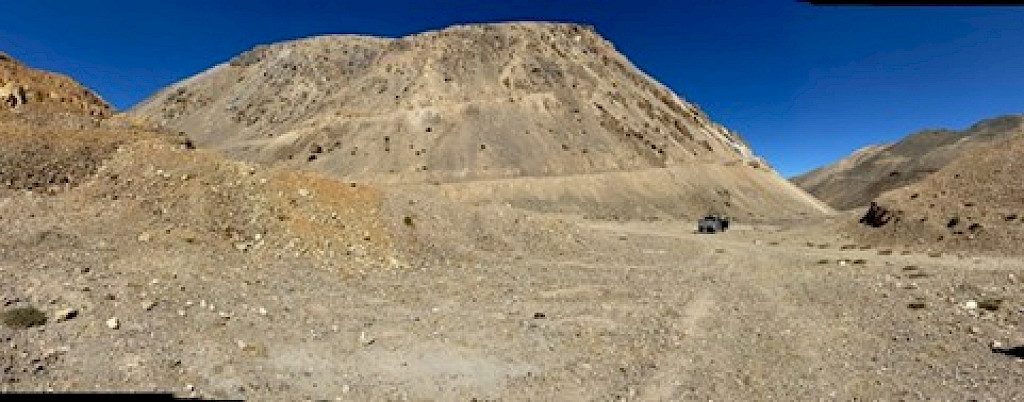
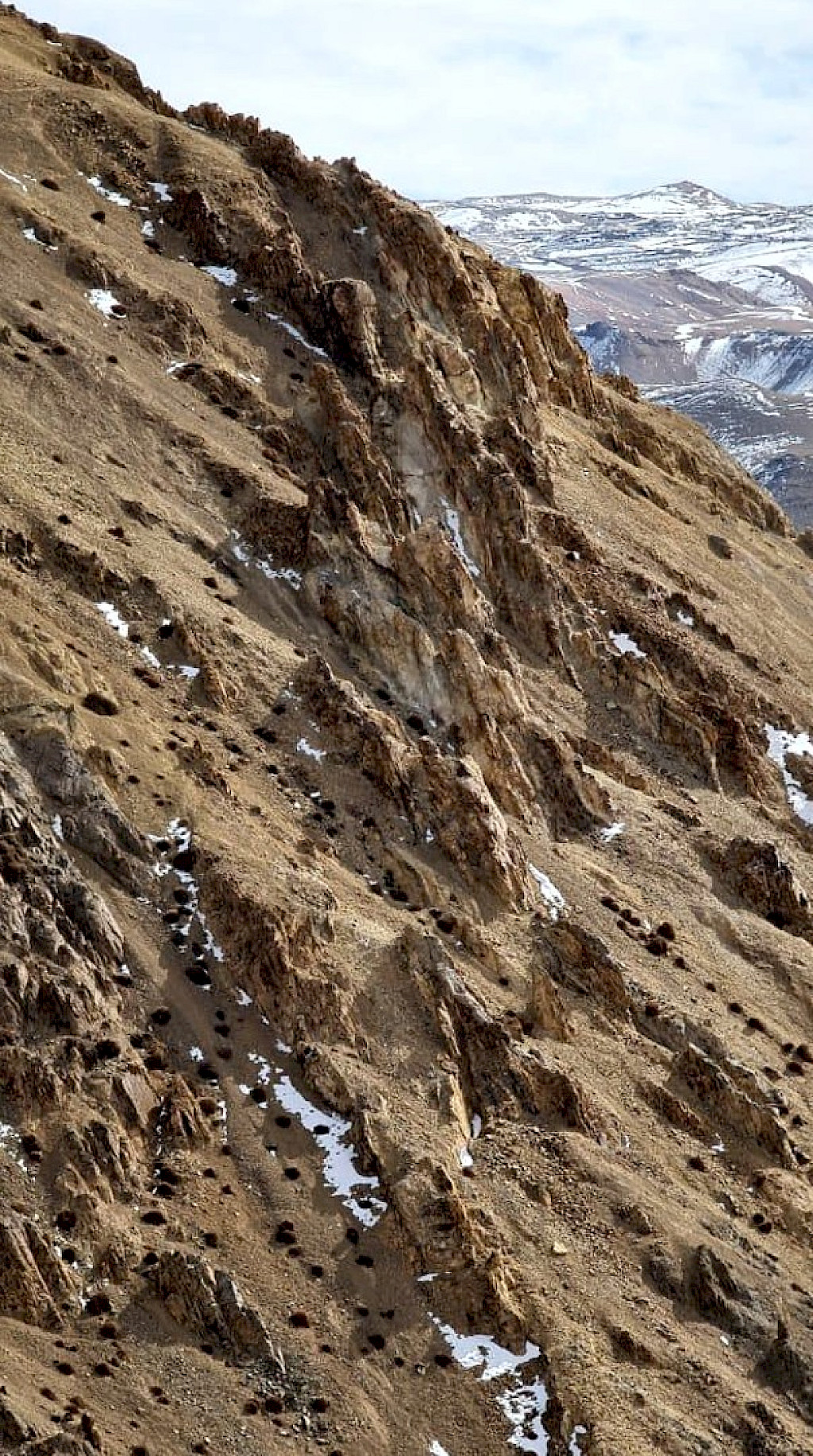
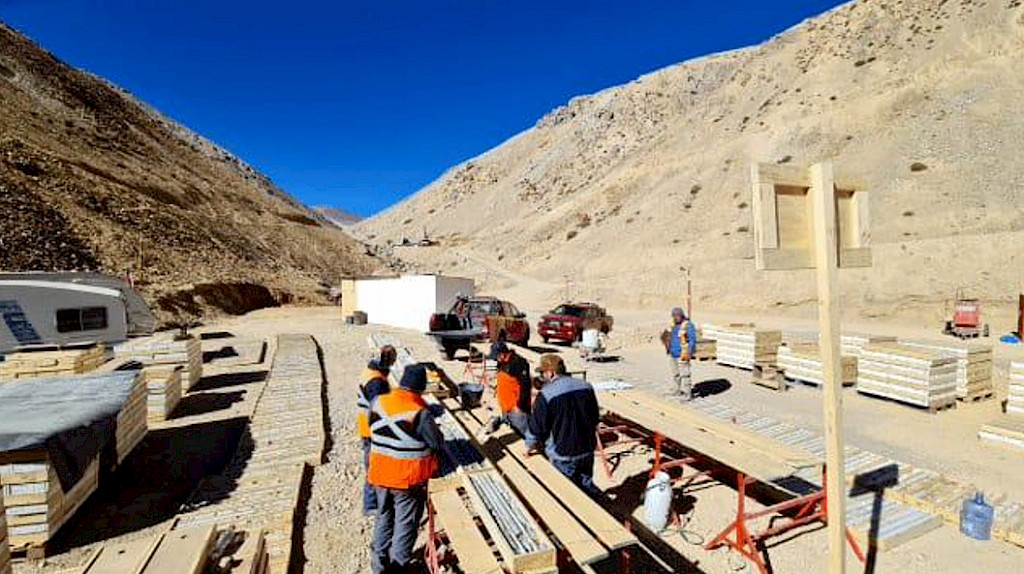
- Gelum Resources Ltd. is targeting a large epithermal disseminated gold deposit located at the north end of the Maricunga Belt in northern Chile: a renowned gold-copper porphyry district.
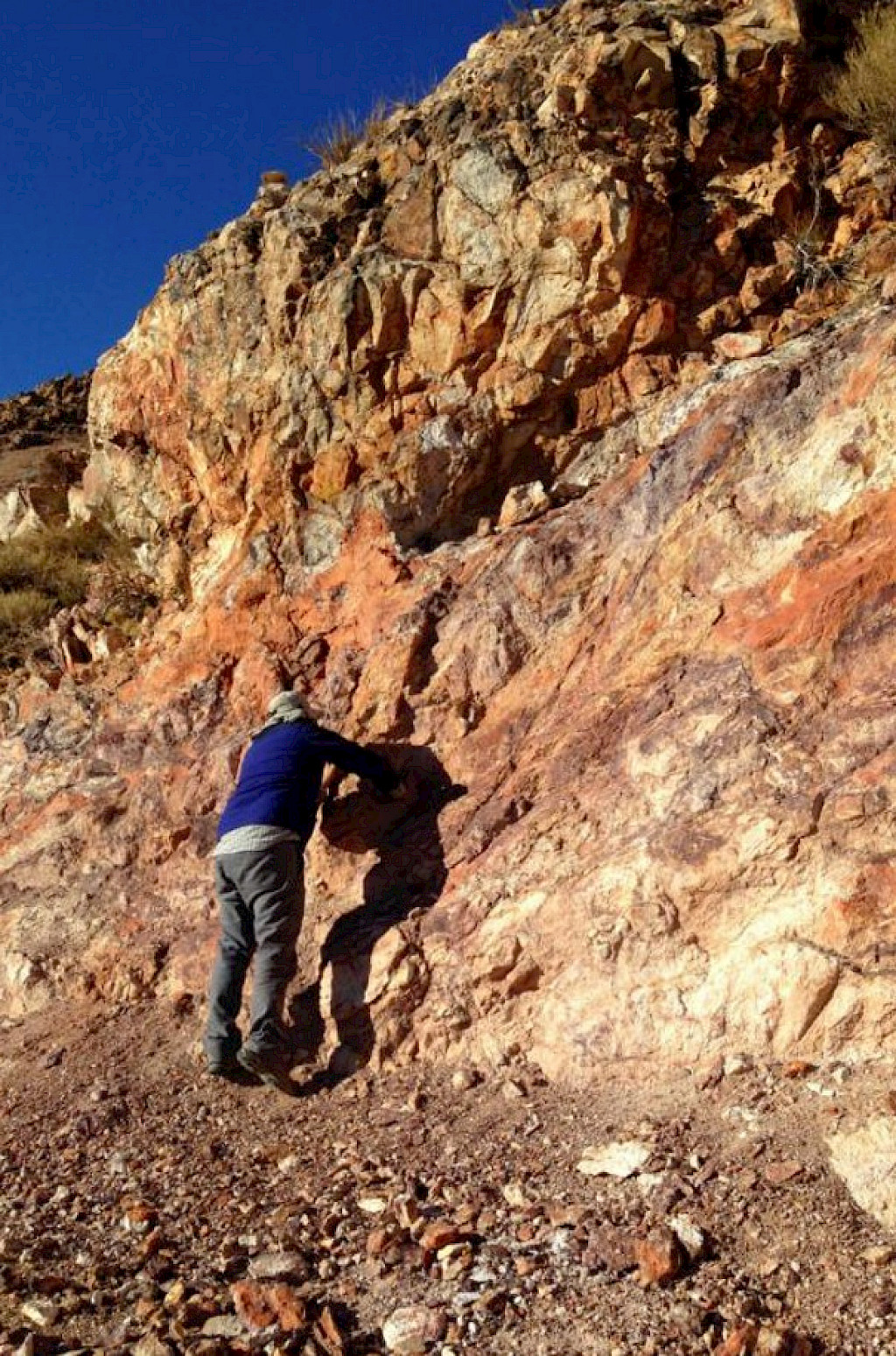
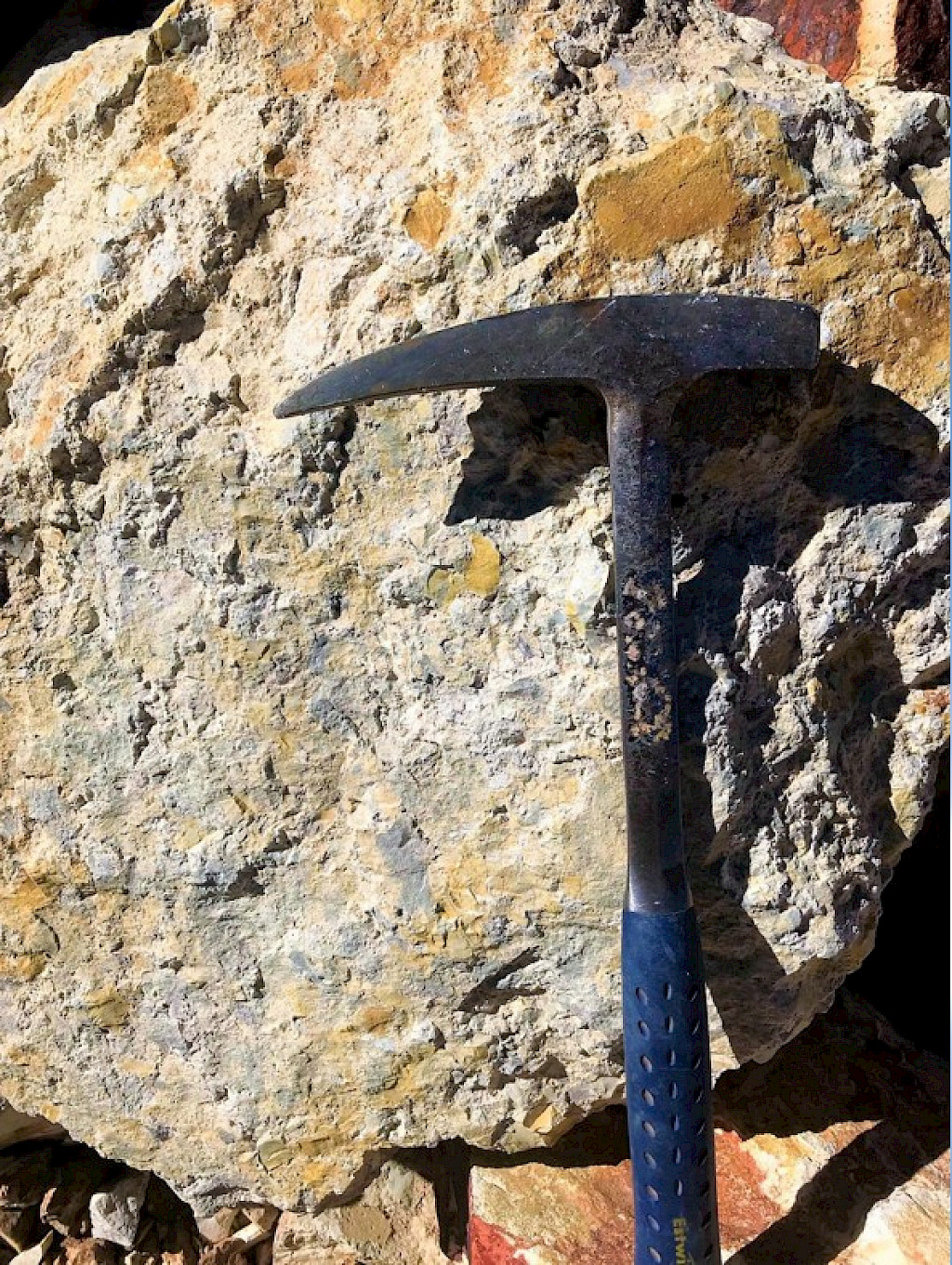
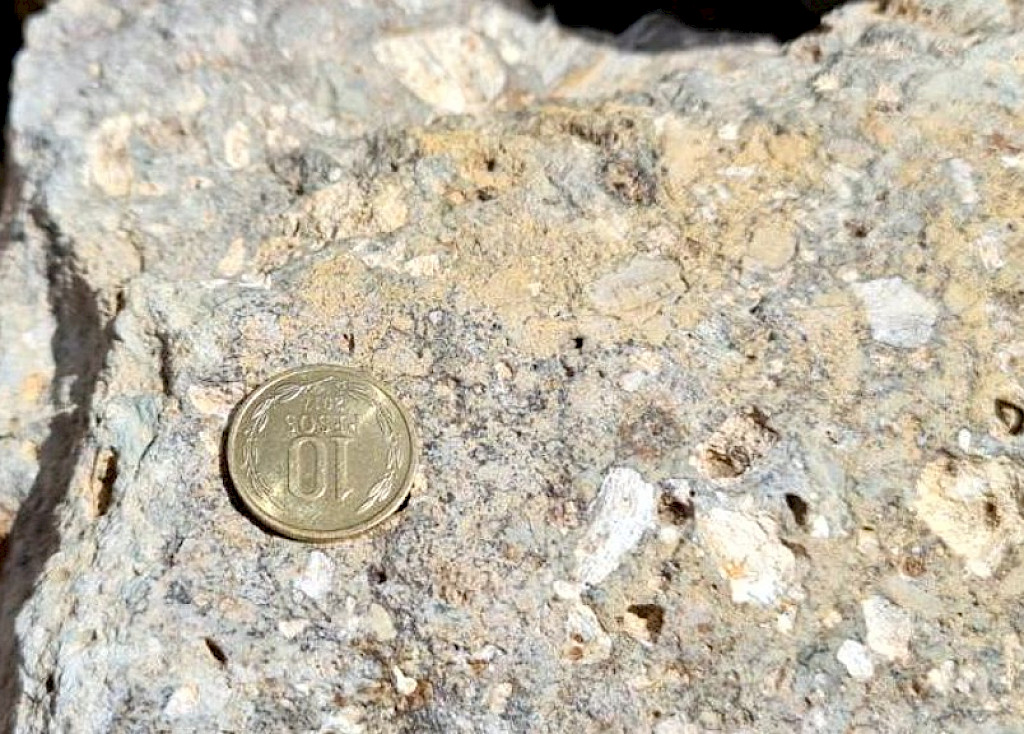
- Gold mineralization is associated with silicified porphyry intrusions and associated diatreme breccias.
- Since 1986, 64 drillholes totaling 10,990m have been drilled in three campaigns, the most recent being 16 holes totaling 2831m drilled in 2024-2025.
- Multiple historical holes have significant intervals of >1g/t gold, with several ending in ≥1g/t gold.
- Only a small portion of the claim block has been drilled. There is significant potential to expand the known mineralized centres associated with the diatreme breccia.

CSE:
GMR
$
OTCQB:
GMRCF
$
Las Tinajas Gold Project
Highlights
Excellent Location
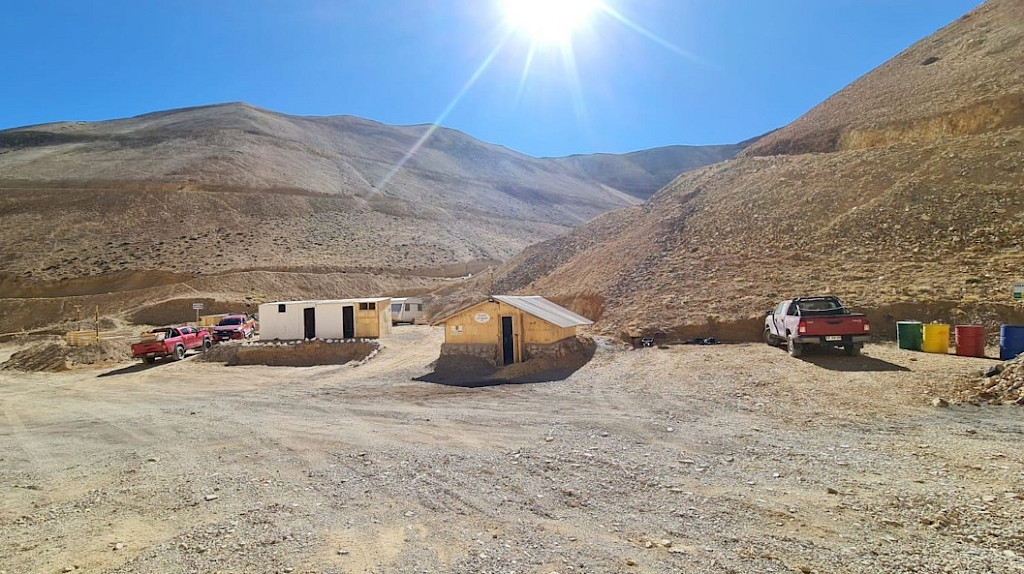
- Las Tinajas is located 120 km northeast of Copiapó, in the Atacama Region of northern Chile, at the north end of the Maricunga Gold Belt.
- The Maricunga Belt is the largest gold belt in Chile, extending for 200 km with both porphyry and high-sulphidation types with a total of 103 million ounces*.
- The 2,600 Ha claim block lies between 3,600-4,000 metres above sea level and is accessed via a Codelco-maintained mining road.
*Source: https://www.andeangeology.cl/index.php/revista1/article/view/V48n1-3294/html
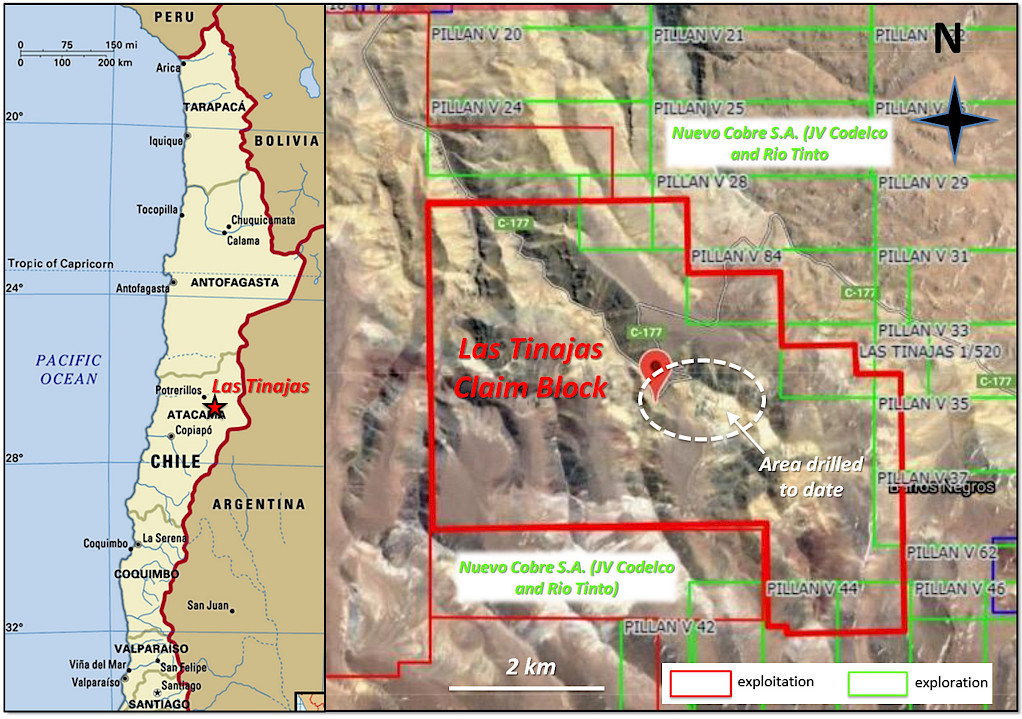
Location of Las Tinajas in northern Chile, and the claim configuration on satellite imagery
Option Agreement
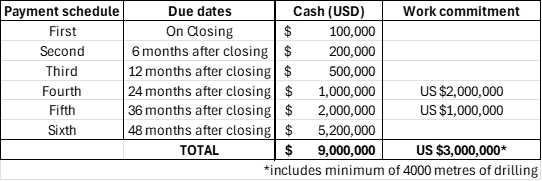
- Gelum has entered into a letter of intent with an arms-length party in Chile to acquire a 100% interest in Las Tinajas subject to satisfactory completion of due diligence by Gelum
- The payment schedule is as follows:
Historical Drill Results
- Since 1986, 64 drillholes (both diamond and reverse circulation) totaling 10,990m have been drilled in three campaigns, the most recent being 16 holes totaling 2831m drilled in 2024-2025.
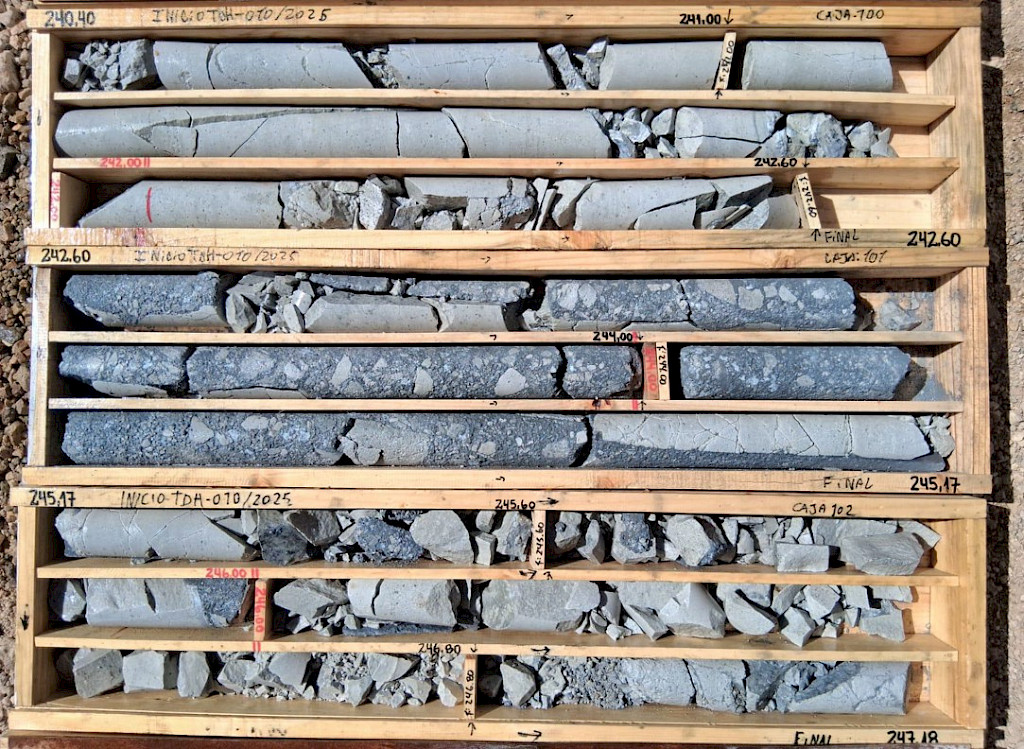
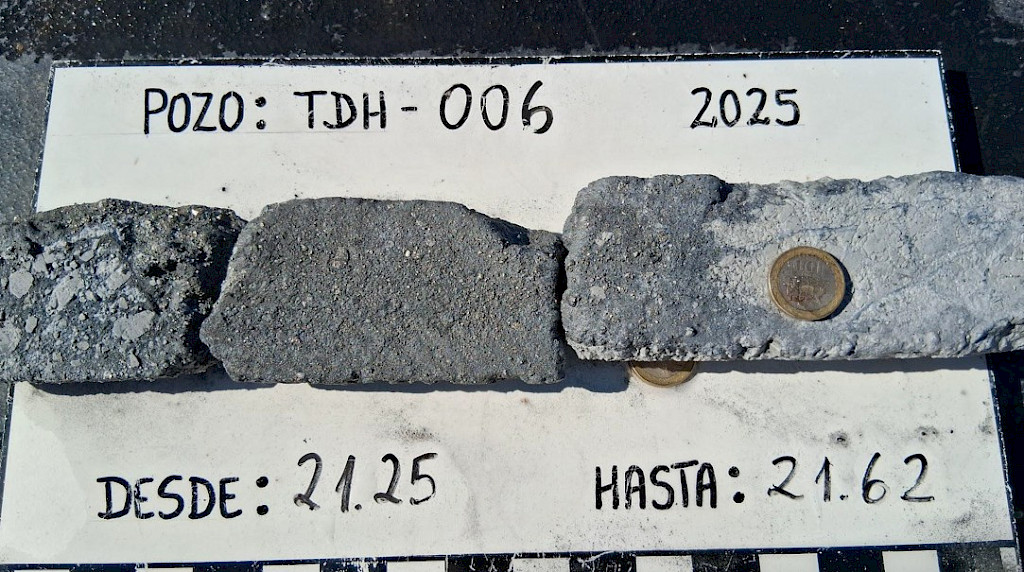
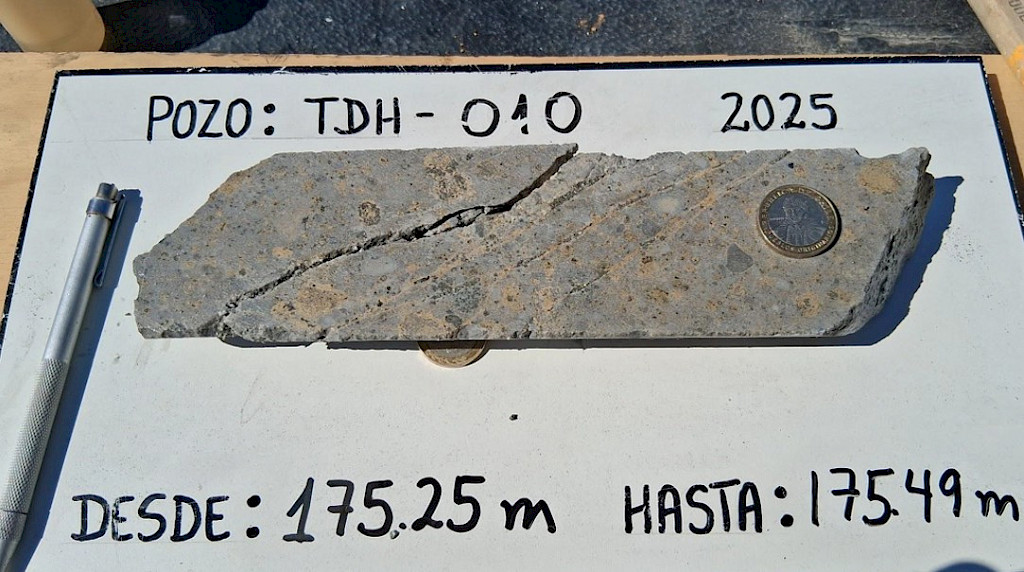
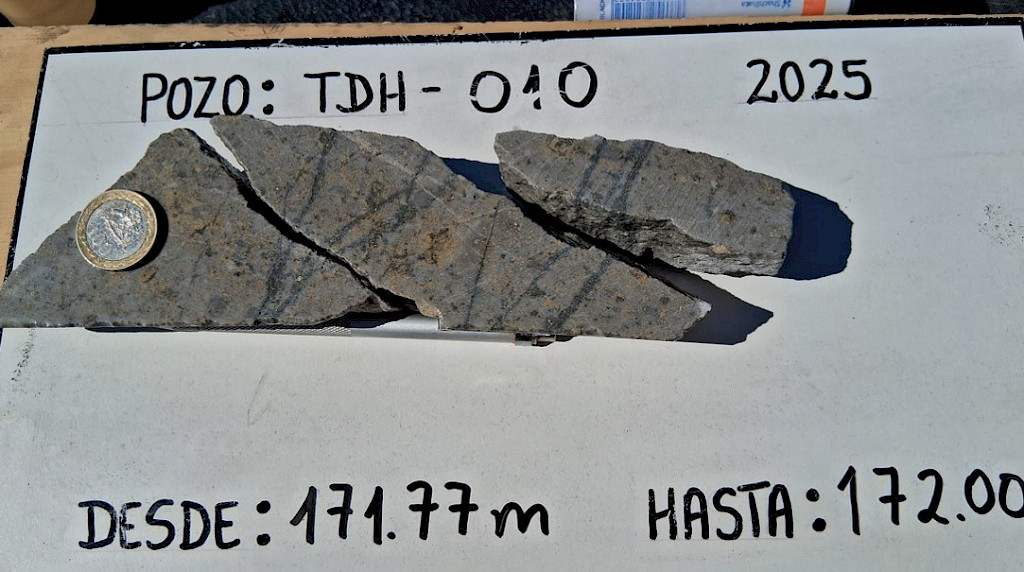
- Drilling has intersected sulphide-hosted gold mineralization (including visible gold) associated with intense silica and sericite alteration of a dacitic diatreme breccia, typical of large gold deposits in the region.
- The breccia matrix is mineralized but it also contains fragments with quartz-vein stockworking indicative of mineralization at depth.
- Multiple historical holes have significant intervals of >1g/t gold, with many ending in ≥1g/t gold, including the following intervals at the end of their holes:
- 43m of 1.18 g/t Au (DT06)
- 35m of 1.23 g/t Au (TT014)
- 26m of 2.09 g/t Au (TT004)
- 58m of 1.42 g/t Au (TT027)
- 82m of 0.93 g/t Au (TDH-010)
- Most of the historical drilling is within 200m of the surface, with the longest hole being 300m (but drilled several kilometres west of the main target).
- The majority of the holes end in anomalous gold grades (5m >0.2 g/t Au), with one quarter ending with 5m >0.5g/t Au: excellent potential for extending mineralization to depth.
- The central diatreme breccia intrudes reactive, calcareous metasedimentary rocks and the highest soil anomaly at surface follows the contact between these units: this contact remains to be drill-tested.
A full list of significant historical resources is provided in the following tables:
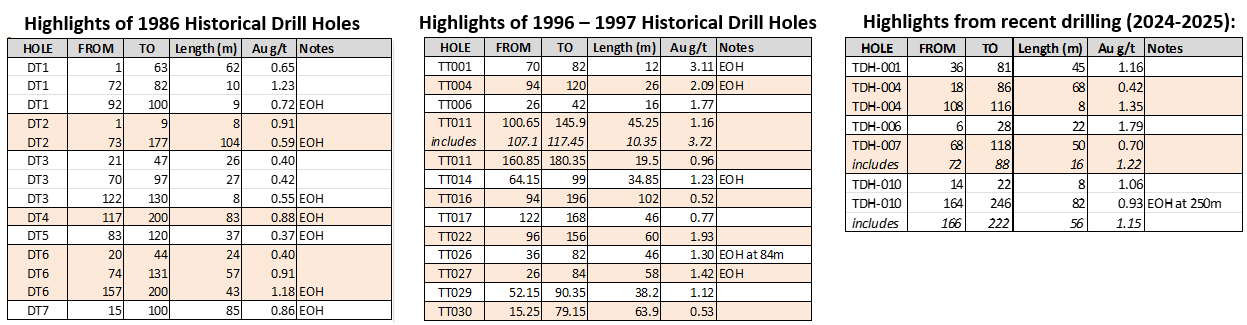
Readers are cautioned that descriptions of historical drilling results reported here should be viewed primarily as a guidance for exploration drilling. The qualified person for this release has not done sufficient work to independently verify the historical sampling results described above.
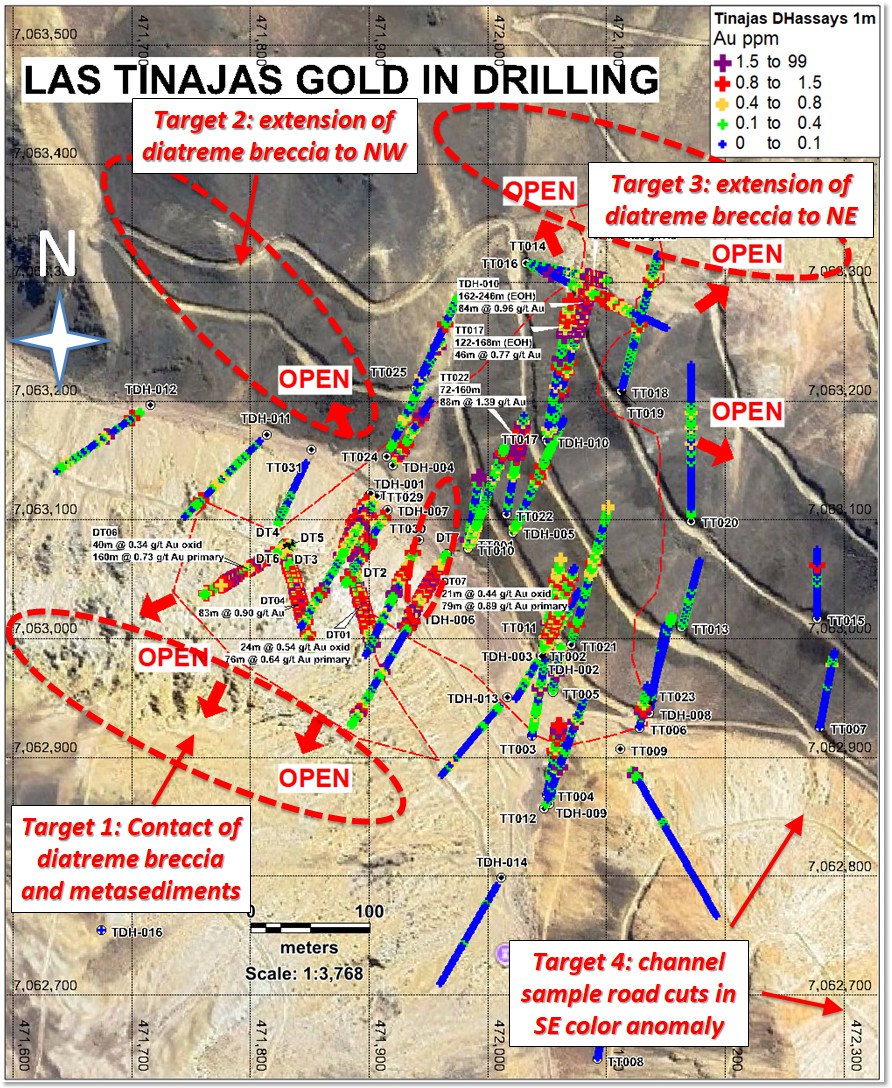
Map of downhole gold assays in historical drilling, showing areas for expansion of mineralization
Upcoming Work
A two-phase exploration programme starting this year will first:
- validate the historical data and expand surface exploration, and then
- expand drill-defined mineralization and complete a maiden NI 43-101 mineral resource estimate.
The exploration target is 2-3 million ounces of gold in the Inferred category. Extensions to the mineralized central diatreme are the priority drill targets. In addition, Gelum with start on preliminary metallurgical work on representative mineralized samples to establish basic recovery parameters.